Used-Car Technology Features That Add Real Everyday Value Today
Smart technology can make an older vehicle feel more connected, convenient, and useful.

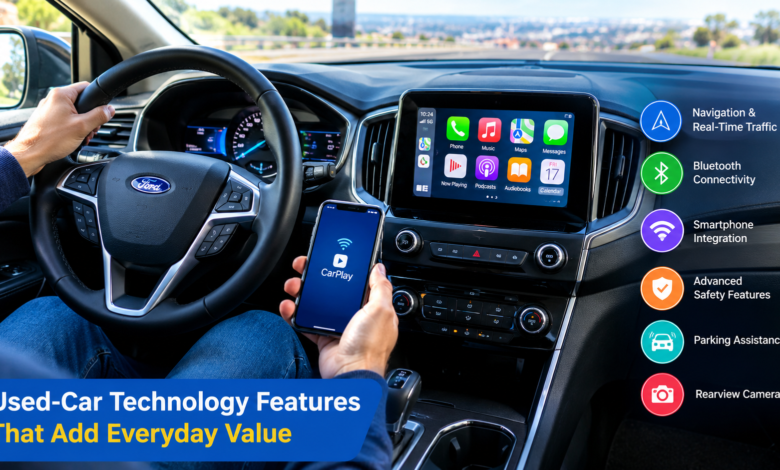
Introduction
Buying a used car is not simply about finding a vehicle with a good price, attractive appearance, and reliable engine. Technology can also have a major effect on how enjoyable and practical a vehicle feels every day. The right Used-Car Technology Features can improve navigation, communication, parking, safety, entertainment, and general convenience without requiring buyers to choose a brand-new model.
Modern vehicles often include technology that was once reserved for expensive luxury cars. Features such as smartphone integration, backup cameras, blind-spot monitoring, adaptive cruise control, parking sensors, and USB charging can provide meaningful benefits during daily driving.
The key is understanding which features offer genuine everyday value and which ones are mainly attractive extras.
Quick Bio
| Feature | Everyday Benefit |
|---|---|
| Apple CarPlay | Smartphone-based navigation, calls, messages, and entertainment |
| Android Auto | Android phone connectivity and navigation |
| Backup Camera | Better visibility while reversing |
| Blind-Spot Monitoring | Alerts drivers to vehicles in difficult-to-see areas |
| Parking Sensors | Helps judge distance while parking |
| Adaptive Cruise Control | Helps maintain a selected following distance |
| USB Charging | Keeps compatible devices powered |
| Bluetooth | Convenient wireless phone and audio connectivity |
Smartphone Integration Makes Used Cars Feel Newer
One of the most valuable technology features in a used car is smartphone integration. Apple CarPlay allows compatible iPhones to provide navigation, calls, messages, music, and other functions through the vehicle’s display.
Android Auto provides a similar experience for compatible Android phones. It can bring navigation, communication, entertainment, and other supported applications to the vehicle’s display.
For used-car buyers, this technology can reduce the importance of an older built-in navigation system. Instead of depending entirely on outdated vehicle software, drivers can use compatible smartphone applications.
That makes smartphone integration one of the strongest Used-Car Technology Features for everyday convenience.
Backup Cameras Improve Reversing Visibility
A backup camera may seem like a simple feature, but it can make everyday driving considerably easier. It provides a view of the area behind the vehicle when reversing and can help drivers identify objects that may be difficult to see through mirrors alone.
NHTSA notes that rearview video systems are designed to help prevent backover crashes and have been required on new vehicles in the United States since May 1, 2018.
When inspecting a used vehicle, buyers should check that the camera image is clear, properly positioned, and free from significant distortion. A camera that works inconsistently may be less useful than one that performs reliably.
Blind-Spot Monitoring Adds Helpful Awareness
Blind-spot monitoring is another technology worth considering. The system uses sensors or cameras to monitor areas alongside the vehicle and can warn the driver when another vehicle is detected in a difficult-to-see location.
This feature can be particularly useful during highway driving and lane changes. It does not replace careful mirror checks or driver attention, but it can provide an additional warning when another vehicle is nearby.
For used-car shoppers, the important point is to understand exactly how the system operates on the specific vehicle being considered.
Parking Sensors Can Make Daily Parking Easier
Parking sensors are particularly useful in crowded parking areas, narrow driveways, and busy urban environments. Depending on the vehicle, sensors may provide audible warnings or visual information as the vehicle approaches an obstacle.
Unlike a backup camera, parking sensors can provide distance-related warnings without requiring the driver to constantly look at a screen.
Together, a camera and parking sensors can make parking more convenient. Buyers should test both systems during an inspection rather than assuming that every sensor or camera works correctly.
Adaptive Cruise Control Can Reduce Highway Effort
Adaptive cruise control is an advanced driver-assistance feature that automatically adjusts vehicle speed to maintain a selected distance from the vehicle ahead.
For people who regularly drive on highways, this can be a valuable convenience feature. It can reduce the need for repeated manual speed adjustments during changing traffic conditions.
However, adaptive cruise control remains a driver-assistance technology rather than a replacement for attentive driving. Drivers must continue monitoring traffic and the road.
Lane-Keeping Technology Provides Additional Assistance
Some used cars offer lane-keeping assistance or lane-centering technology. NHTSA describes lane-keeping assistance as technology that can gently steer a vehicle to help prevent unintended lane departure, while lane-centering assistance can provide continual steering support to keep a vehicle centered.
These systems can be useful during longer journeys, but their exact operation differs between manufacturers and model years.
When buying a used vehicle, drivers should learn whether the feature provides warnings, steering assistance, or both.
Bluetooth Connectivity Remains Highly Practical
Bluetooth may not sound as impressive as advanced driver assistance, but it remains one of the most useful technologies in an everyday vehicle.
A functioning Bluetooth system can allow compatible phones to connect wirelessly for calls and audio. This reduces the need for repeatedly handling a phone while driving.
Even if a used car lacks modern smartphone integration, good Bluetooth connectivity can still make the vehicle more convenient.
USB Ports and Device Charging Add Everyday Value
A vehicle does not need complicated technology to be useful. USB ports can be extremely valuable for drivers who regularly rely on smartphones, navigation applications, or other portable devices.
Before purchasing a used car, buyers should check which charging ports are available and whether they function correctly. Some older vehicles may have USB ports intended primarily for charging, while others may support data connections for smartphone integration.
A simple charging feature can therefore make a noticeable difference during commuting and longer journeys.
Keyless Entry and Push-Button Start
Keyless entry and push-button start can improve everyday convenience. Instead of repeatedly inserting a traditional key, drivers may be able to unlock the vehicle and start it with less effort.
These systems can be particularly convenient when carrying shopping bags, luggage, or other items.
However, buyers should confirm that the vehicle includes all necessary keys or fobs and that the system operates properly before completing a purchase.
Built-In Navigation Is Less Important Than It Once Was
Built-in navigation was once a major selling point, but smartphone integration has changed how many drivers approach navigation.
Modern smartphone platforms can provide regularly updated maps and navigation services through compatible vehicle systems. Apple specifically supports turn-by-turn directions through CarPlay, while Android Auto brings supported navigation applications to compatible vehicle displays.
Therefore, an older used car does not necessarily need the newest built-in navigation system to provide a good navigation experience.
Check Technology Before Buying a Used Car
Technology should be tested just like the engine, brakes, tires, and air-conditioning system.
Buyers should turn on the infotainment system, connect a compatible phone where possible, test the backup camera, check parking sensors, examine warning lights, and confirm that buttons and controls respond correctly.
It is also worth checking whether software updates, subscriptions, special equipment, or manufacturer-specific applications are required for certain features.
A long list of technology features has little value if several of them no longer function.
Choose Useful Technology Over Flashy Extras
The best Used-Car Technology Features are not necessarily the most complicated ones. A reliable backup camera, smartphone integration, Bluetooth, charging ports, parking sensors, and useful driver-assistance systems can provide more everyday value than an expensive feature that is rarely used.
Used-car buyers should consider their own driving habits. Someone who spends hours on highways may prioritize adaptive cruise control and blind-spot monitoring. A city driver may place greater importance on parking sensors and a clear backup camera. Someone who frequently uses navigation may consider CarPlay or Android Auto essential.
Conclusion
Technology can significantly improve the ownership experience of a used vehicle. The right features can make an older car feel more modern while adding convenience and useful driver assistance.
Smartphone integration, backup cameras, blind-spot monitoring, parking sensors, adaptive cruise control, Bluetooth, USB charging, and lane-assistance technology can all provide practical benefits when properly maintained.
The smartest approach is not to buy a used car simply because it has the longest technology list. Instead, focus on features that genuinely match everyday driving needs and verify that each system works correctly before purchase. A well-equipped used vehicle can deliver many of the conveniences drivers expect from newer cars without requiring the cost of buying a brand-new model.
FAQs
What are the most useful Used-Car Technology Features?
Smartphone integration, backup cameras, parking sensors, Bluetooth, and useful driver-assistance systems are among the most practical options.
Is Apple CarPlay valuable in a used car?
Yes. Compatible CarPlay systems can provide navigation, calls, messages, and entertainment through the vehicle display.
Is Android Auto useful in older vehicles?
Yes, when the vehicle and phone are compatible. It can provide access to supported navigation, communication, and entertainment functions.
Why is a backup camera important?
It provides a clearer view behind the vehicle while reversing and can improve awareness of nearby objects.
Does blind-spot monitoring replace checking mirrors?
No. It is an assistance system that provides additional awareness and does not replace attentive driving.
Should used-car buyers test technology?
Yes. Every major electronic feature should be tested before purchase to identify faults or connectivity problems.
Is built-in navigation still important?
It can be useful, but smartphone integration may provide a more flexible navigation experience in compatible vehicles.
What technology adds the most everyday value?
The best choice depends on driving habits, but smartphone integration, backup cameras, parking assistance, Bluetooth, and useful safety technologies are strong choices for many drivers.